
Areas Served

Container Sales Gillingham
Container sales in Gillingham are commonly linked to storage, site work, stock holding and equipment protection. With workshops, trade yards, marine-related businesses, construction sites and commercial storage across the area, buyers usually need a unit that can arrive promptly, sit on a usable surface and avoid unnecessary groundwork.
Gillingham forms part of the Medway towns and has good connections to the A2, M2 and the wider Kent road network. The last part of the journey can be less simple, though. Estate roads, shared entrances, parked cars, low branches and tight turns may all affect delivery. Start with the container you need, then check the route and the ground where it will be placed.
If the container will stay in place for years, buying is often the sensible option. For temporary project storage, container hire may suit you better. A purchase also tends to work well where the unit will be modified, accessed regularly or used as a long-term store.
- Store tools, stock, furniture, archives, plant and building materials
- Keep business equipment and goods securely at ground level near the yard or unit
- Add storage where a permanent outbuilding would take longer to approve or construct
- Support contractors working across Gillingham, Rainham, Chatham and Rochester
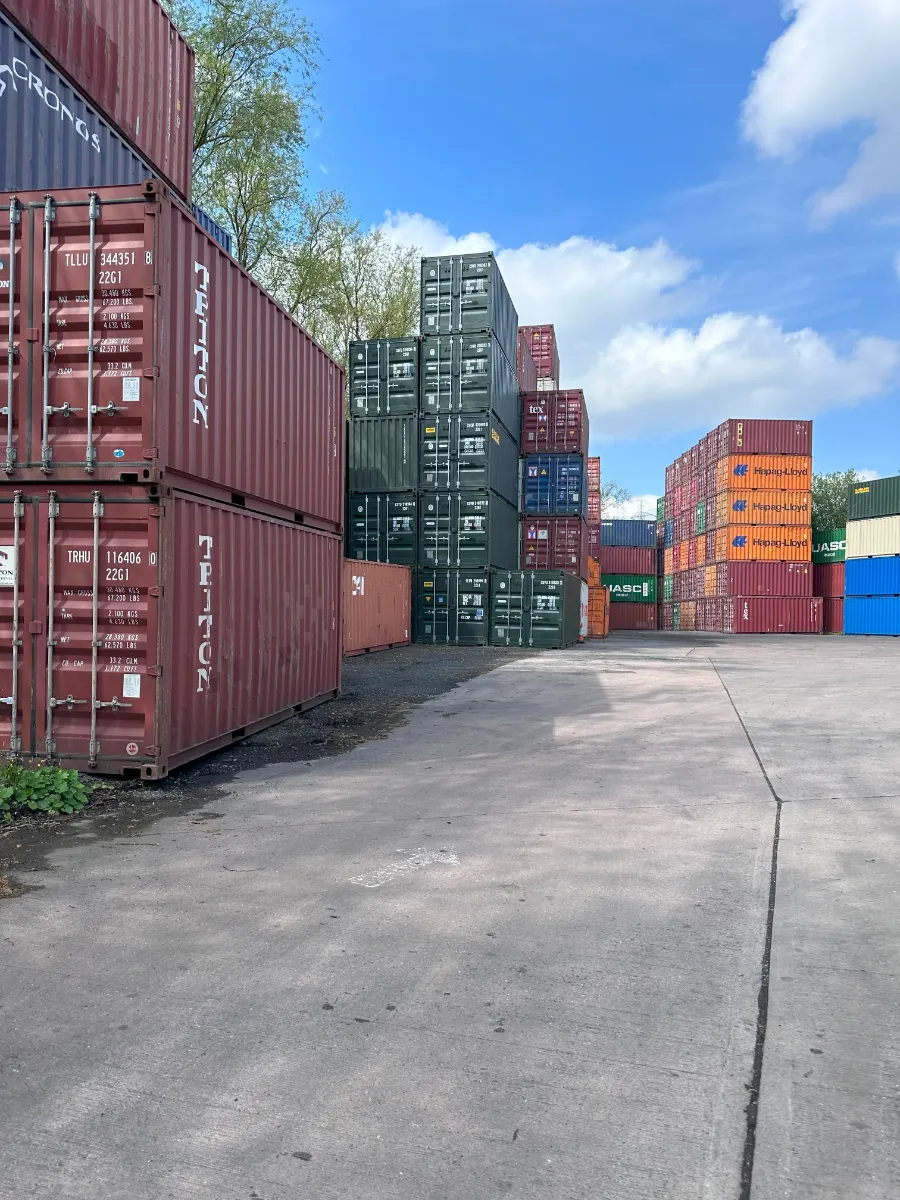
Choosing the right container size and type
The right size depends on what you plan to store, how often the doors will be opened and how much room the site has for delivery and placement. A small unit soon becomes difficult to load. A larger one may hold everything comfortably but fail at the entrance or take up too much of the yard.
The usual starting points are the 20ft container and the 40ft container. A 20ft unit suits general storage, tools and mixed goods. A 40ft unit provides more floor space for bulk stock, palletised materials, larger machinery or a layout that doesn't rely on stacking items high.
| Size | External dimensions | Typical use |
|---|---|---|
| 20ft standard | About 6.06m x 2.44m x 2.59m | Tools, equipment, archives, trade stock and domestic storage |
| 40ft standard | About 12.19m x 2.44m x 2.59m | Bulk storage, palletised goods and larger site storage |
| 20ft high cube | About 6.06m x 2.44m x 2.89m | Taller goods, racking and extra loading headroom |
| 40ft high cube | About 12.19m x 2.44m x 2.89m | High-volume storage, larger racking layouts and commercial use |
Check the door opening as well as the external measurements. Container doors are narrower than the outside of the box, so measure your widest item against the clear opening. For palletised goods, consider how loading will happen. A pallet truck, forklift or manual handling may each need a different amount of space in front of the container.
If loading will be frequent, review the door opening, floor height and turning space before delivery. This is one of those details that can make a container easy to use or awkward every day.
Some loads need a different design. Open-top containers allow goods such as waste, scrap or machinery to be loaded from above. Flat racks suit long steel, pipes, plant and other awkward cargo that needs open sides or end support. Refrigerated containers are intended for temperature-controlled goods, but they need a suitable power supply and enough room on site. See open tops containers, flat racks or a refrigerated container if one of these may be more suitable.
Container condition grades and what they mean
Condition affects a container's appearance, useful life and suitability for the site. A used unit with dents and older paint can still be structurally sound. A cleaner container may make more sense where it will be seen by customers, staff or the public.
- Wind and watertight means the unit keeps out wind and rain. It may still have dents, cosmetic rust, older repairs or worn paint.
- One-trip means the container has made one loaded journey from the factory. It will usually have cleaner paint and fresher door seals.
- IICL refers to a stricter inspection standard used by the Institute of International Container Lessors. It is often relevant where condition matters for leasing or transport.
- CSC plate shows that the container carries safety approval for the international inspection regime covering transport use.
- Tare means the empty weight of the container. Payload is the maximum cargo weight it is designed to carry.
The site itself can influence the best grade. A unit near the river or on an exposed industrial yard may experience more salt air, which can speed up paint wear and hinge corrosion. On a visible commercial frontage, a one-trip or higher-grade used container may need less cleaning and repainting after delivery.
Before buying, inspect the doors, corner castings, floor, roof, seals and lower side rails. Look for heavy patching, doors that don't close evenly and signs of prolonged damp. Minor scuffs are normal. Structural distortion needs closer attention.
Hire or buy for a Gillingham site
Base the decision on how long you need the unit, how often the site layout may change and whether the container will move again. Hire generally suits a short-term or uncertain requirement. Buying usually makes more sense for a container that will stay on site, be modified or hold stock for the long term.
- Hire suits refurbishments, temporary stock overflow, seasonal demand, events and short projects
- Buy suits ongoing storage, workshops, tool stores, archives and regular access by the same team
- Hire limits your commitment if the site layout is likely to change
- Buy is more practical if you plan to add shelving, lighting or upgraded locks
On many Gillingham sites, the useful question is whether the container will be placed once and left alone, or moved as the yard develops. If relocation is likely, hire can avoid the work of buying and later reselling a unit. If it's going into a trade yard as a long-term store, buying gives you more control over its condition and setup. For a short project, see container hire.
Container delivery, access and placement in Gillingham
Delivery planning often determines whether a container purchase runs smoothly. The unit may be suitable, but the delivery can still fail if the road is too narrow, the entrance too tight or the ground too soft for the vehicle.
Gillingham combines main-road access with tighter estate roads and residential side streets. Locations near the A2 or M2 may be easier for larger vehicles, while older industrial roads and smaller yards need more careful planning. Delivery may use a tilt-bed trailer, crane-assisted offload or another vehicle selected for the route and final position. Vehicle weight, access width, turning room and ground bearing all matter.
Delivery vehicles must stay within legal weight limits. The Lorry Types and Weights guide explains Gross Vehicle Weight limits. This is the total legal weight of the vehicle, its load, fuel and driver. On a narrow access road, weight can be just as restrictive as width.
For freight terminology and standard liability wording used in the UK logistics sector, BIFA is a useful reference. If the container may be used for sea freight or export transport, the relevant safety approval system is covered by the IMO.
Check these points before delivery:
- Gate and entrance width, plus turning room for the delivery vehicle
- Overhead cables, trees, signs and building overhangs
- Ground condition after rain, particularly on grass, gravel or soft hardcore
- Room for the vehicle to line up straight with the drop point
- Slopes that could affect door swing or water run-off
- Whether the doors will face a fence, building or loading area
Place the container on firm, level ground wherever possible. Concrete pads, compacted hardcore, paving slabs or a prepared yard surface are better than soft soil. The corner castings and base need proper support, especially if the ground is uneven. If the base twists, the doors may become difficult to open and close.
Face the doors towards the most useful access point rather than simply the nearest open space. Leave enough room for them to open fully and for goods to be moved in and out safely.
When you order, provide the postcode, entrance photographs, clear width measurements, the route from the gate to the siting point and details of the surface. That information helps build a workable delivery plan and reduces the chance of a failed offload. For more route and drop-planning advice, see container delivery.
Security, condensation and maintenance
A container's security depends on its lock, position and visibility. In commercial parts of Gillingham, a unit hidden against a poorly lit fence may be more exposed than one placed in clear view of the yard. A lockbox, good-quality padlock and sensible positioning all help. For valuable contents, consider lighting, a monitored alarm or CCTV coverage where practical.
Condensation is a common storage problem. It forms when warm, moist air meets the cold steel shell. Damp air and changing temperatures in riverside or coastal locations can make it worse. These steps help:
- Keep the container's vents clear and working
- Use moisture traps or desiccant packs for sensitive goods
- Store items on pallets or shelves rather than directly on the floor
- Leave an air gap between the load and the walls where possible
- Check for roof drips and damp patches after heavy rain or frost
Maintenance is fairly straightforward, but don't leave small problems unattended. Grease stiff door gear, clear leaves and debris from the roof, check seals after storms and treat paint chips or rust spots early. On exposed sites around Gillingham, an inspection every few months can prevent minor issues becoming door or floor damage.
Export compliance and container documents
If the container may later be used for export, shipping or onward freight, its condition and paperwork matter as much as its appearance. It should have a valid CSC plate, doors that close correctly, a sound floor and no damage that would prevent safe carriage. CSC stands for Container Safety Convention, the international safety standard for cargo containers in transport.
Check the container against the carrier's booking rules and the receiving terminal's requirements too. A unit that works well for static storage may need further checks before it is loaded for sea freight.
- Valid CSC approval
- Dry and clean interior
- Sound doors, seals and locking gear
- No structural distortion around the corner castings or base rails
- Clear tare weight and size details
- Any cleaning required because of previous cargo residue
BIFA is a reference used by many UK freight businesses for liability terms and common industry wording. The IMO provides the official source for the CSC safety framework and container testing rules. If you're buying a unit for storage now with the possibility of shipping it later, check its approval status before purchase rather than waiting until an export booking is made.

How container buying and delivery works
A few practical checks at the start can prevent delivery problems later. The usual process is:
- Confirm the required size, condition grade and whether you need to hire or buy
- Share the site postcode, access details and any delivery restrictions
- Send photographs of the gates, roads, ground and final siting area
- Decide whether a standard, high cube or specialist container is needed
- Agree the delivery method based on the route, ground and space for offload
- Prepare firm, level ground and remove obstructions
- Receive the container, check the doors and seals, then confirm its final position
Lead time depends on stock, condition grade and any modifications required. Standard units generally involve fewer preparation steps than containers needing repainting, racking, extra doors, insulation or specialist fittings. If access to a Gillingham site is restricted, solve the route issue early. There's little value in arranging a delivery slot that the vehicle can't use.
Once the container arrives, check that it sits level, the doors operate properly and the ground hasn't softened. Make sure the locking arrangement works for the people using the unit. For long-term storage, include inspection, cleaning and minor repairs in the site's normal maintenance routine.
