Self Storage Businesses South Tyneside
Acorn offers shipping containers in South Tyneside for individuals aiming to establish a self-storage business. Discover our reliable solutions tailored to your needs.

Acorn offers shipping containers in South Tyneside for individuals aiming to establish a self-storage business. Discover our reliable solutions tailored to your needs.
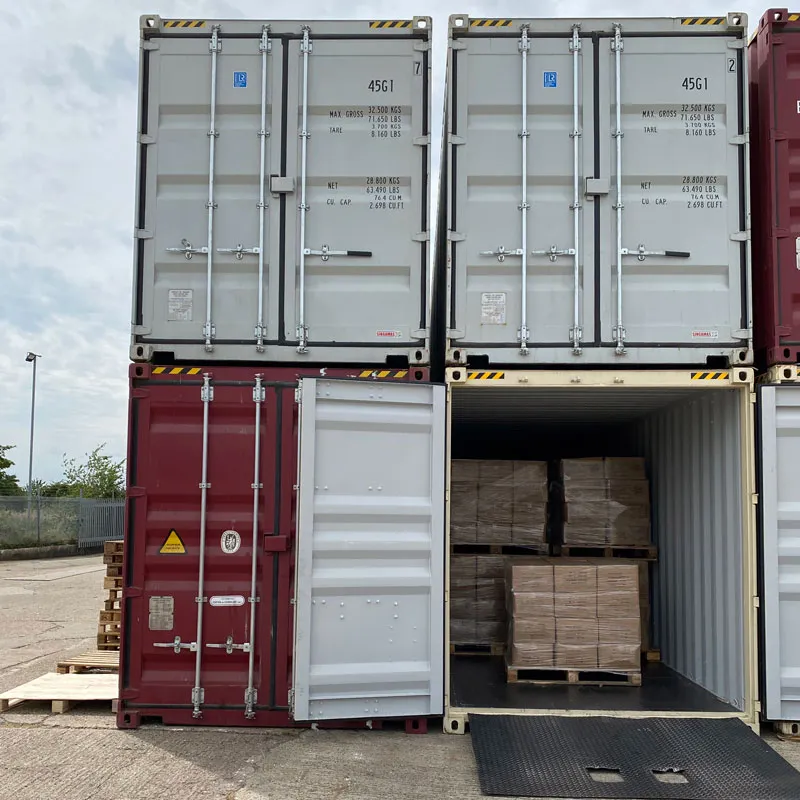
Shipping containers represent a fundamental element of global trade and logistics. Constructed to ISO standards, these robust, weather-resistant steel boxes facilitate the secure and efficient transportation of goods across vast distances, primarily via sea, but also by rail and road. Understanding the various types, sizes, and applications of shipping containers empowers UK businesses to optimise their supply chains, manage storage needs, and explore innovative uses.
The shipping container industry offers a range of container types, each designed for specific cargo requirements. Recognising these variations helps businesses select the most appropriate container for their operational needs.
Container dimensions adhere to international ISO standards, ensuring compatibility across different transport modes and handling equipment globally. The most prevalent sizes are 20ft and 40ft.
Other less common sizes exist, including 10ft containers and 45ft high cube containers, used for specific applications or regional requirements.
Shipping containers are built to withstand the rigours of international transport. Their primary construction material is Corten steel, also known as weathering steel. This alloy steel forms a protective layer of rust when exposed to the atmosphere, preventing further corrosion.
Key structural components include:
This robust construction ensures containers can endure harsh marine environments, significant stacking loads, and repeated handling.
While their primary function is shipping, the inherent strength, modularity, and cost-effectiveness of containers have led to widespread alternative uses for UK businesses.
These alternative applications highlight the adaptability and value proposition of shipping containers for diverse business needs.
Businesses considering using shipping containers must decide whether buying or hiring is the most suitable option. This decision depends on factors such as the intended use, duration of need, and budget.
Acorn Containers assists UK businesses in evaluating their specific requirements to determine the most economically viable and operationally effective solution, offering both options.
Selecting a reputable supplier is crucial for acquiring quality containers and ensuring reliable service. A good supplier offers:
Partnering with an experienced supplier like Acorn Containers ensures businesses receive high-quality products and professional service tailored to their requirements.
A standard 20ft shipping container typically measures approximately 20 feet in length, 8 feet in width, and 8.6 feet in height.
Yes, shipping containers are widely used for secure, weather-resistant on-site storage for businesses. They provide a flexible and cost-effective storage solution.
A 'Reefer' container is a refrigerated shipping container designed to transport temperature-sensitive goods, maintaining a consistent internal temperature throughout transit.
With proper maintenance, a shipping container used for transport can have a lifespan of 10-12 years. When repurposed for static storage or other uses, they can last significantly longer, often 25 years or more.
Yes, shipping containers are designed to be fully watertight to protect cargo during sea transport. Their doors feature robust rubber seals to prevent water ingress.
Absolutely. Shipping containers are highly adaptable and can be modified for various purposes, including adding doors, windows, insulation, ventilation, and electrical systems. Acorn Containers offers comprehensive modification services.
"Cargo worthy" indicates that a used container is structurally sound and meets the requirements for international shipping. It is suitable for transporting cargo by sea, road, or rail.
Planning permission requirements vary depending on your location, the intended use, and the duration the container will be on your property. It is advisable to check with your local council regarding specific regulations.
Shipping containers are typically delivered using specialist vehicles. For placement on-site, a Hiab vehicle with a crane is often used to lift the container into position.
Standard dry van containers are suitable for transporting general, non-perishable cargo that does not require temperature control. This includes manufactured goods, textiles, electronics, and packaged foods.
High cube containers offer extra vertical space (an additional foot in height compared to standard containers), providing greater volume capacity, which is beneficial for transporting light, bulky cargo.
Corten steel, or weathering steel, forms a protective layer of rust when exposed to the atmosphere. This layer prevents further corrosion, making the steel highly resistant to environmental degradation.
Yes, shipping containers are designed to be stacked, both during transport on ships and for storage purposes. Corner posts provide the necessary structural strength for stacking.What is the difference between an open top container and a flat rack container?
An open top container has no fixed roof and uses a tarpaulin cover, allowing for top loading. A flat rack container has no sides or collapsible ends, designed for oversized or heavy cargo.
Yes, repurposing used shipping containers contributes to sustainability by reducing the need for new materials and minimising waste, aligning with eco-friendly business practices.
A 40ft standard shipping container offers an internal volume of approximately 67 cubic metres.
Yes, certain hazardous materials can be transported in specific types of containers, such as tank containers for bulk liquids or gases, provided they comply with strict international regulations and safety protocols.
Hiring a container offers flexibility for short-term needs, avoids large upfront capital expenditure, and shifts responsibility for maintenance and disposal to the supplier.
Acorn Containers sources containers that meet international standards and conducts thorough inspections to ensure structural integrity and suitability for purpose, offering different grades to meet client requirements.
Yes, shipping containers can be insulated and fitted with HVAC systems to create climate-controlled environments, suitable for storing sensitive goods or creating comfortable workspaces.