Self Storage Businesses Hereford
Acorn offers shipping containers in Hereford for individuals aiming to establish a self-storage business. Discover our reliable solutions for your entrepreneurial venture.

Acorn offers shipping containers in Hereford for individuals aiming to establish a self-storage business. Discover our reliable solutions for your entrepreneurial venture.
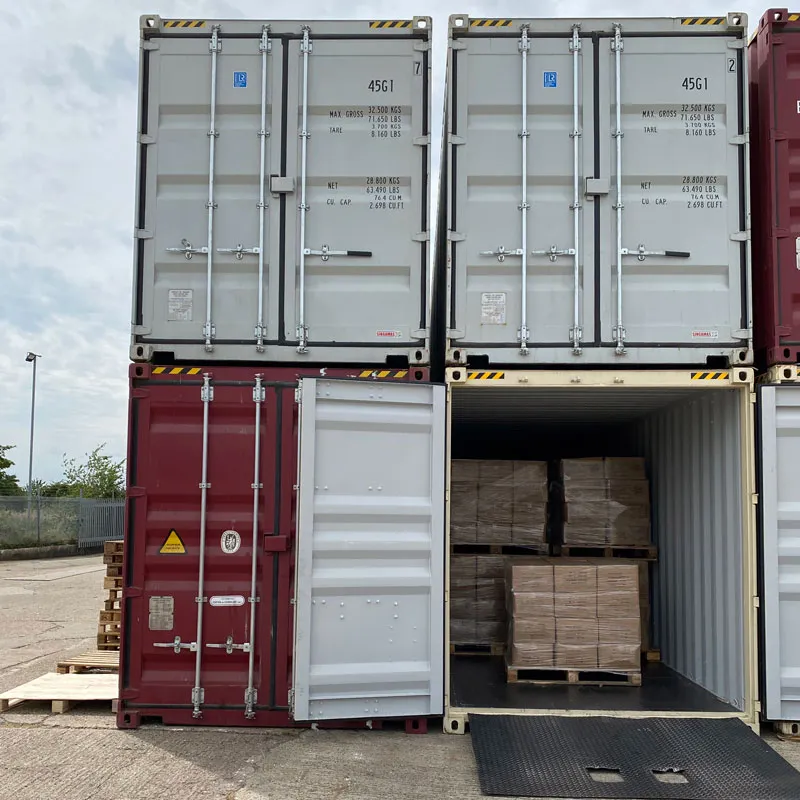
Shipping containers form the backbone of global trade, facilitating the movement of goods across oceans, continents, and local areas. Constructed from high-grade steel, primarily Corten steel (also known as weathering steel), these robust units offer exceptional strength and durability. Their standardisation in size and structure ensures seamless handling across various modes of transport, including ships, trains, and trucks.
Originally designed purely for freight logistics, shipping containers have evolved significantly. Businesses now utilise them for an extensive range of applications beyond simple transport. Their inherent resilience and modular nature make them highly adaptable for diverse commercial needs, offering a versatile and cost-effective solution compared to traditional building methods or storage options.
Acorn Containers provides a comprehensive selection of shipping containers, catering to businesses across the UK. Whether you require containers for storage, modification, or transport, we offer units in various sizes and conditions, ensuring you find the ideal solution for your specific operational requirements.
The world of shipping containers encompasses several types and standard sizes, each designed for particular cargo or usage requirements. Understanding these variations helps businesses select the most appropriate container for their needs.
Standard lengths for shipping containers include 20ft and 40ft, with 40ft high cube containers also being very popular. These dimensions are internationally recognised, facilitating global logistics. Businesses often utilise 20ft containers for smaller storage or transport needs and 40ft containers for larger volumes. Specialised uses might require reefers, flat racks, or open tops.
Beyond their initial purpose, businesses leverage shipping containers for a multitude of applications, offering flexibility, security, and cost savings.
Providing secure and accessible storage directly on a business premise is a primary use. This eliminates the need for off-site warehousing, reduces transport costs, and keeps inventory or equipment readily available. Businesses across various sectors, including construction sites, farming, and even community sports clubs, benefit from on-site container storage for tools, materials, and equipment.
Containers offer a fast and adaptable solution for creating temporary retail spaces, exhibition stands, or food outlets. Their portability allows businesses to set up in various locations for events, festivals, or seasonal trading, providing a unique and eye-catching presence.
With modifications, containers transform into functional workshops, site offices, or secure equipment enclosures. This is particularly valuable on remote sites or where quick, temporary structures are required. Organisations like local councils and educational institutions often utilise modified containers for site management or additional facilities.
Modified containers provide secure and comfortable welfare facilities on construction sites or temporary workspaces. They can house canteens, drying rooms, toilets, and even basic accommodation, offering essential amenities in remote or developing locations.
Businesses requiring controlled environments for sensitive goods utilise modified containers. This includes climate-controlled units for archives, pharmaceuticals, or electronics, and highly secure units for valuable items. Even organisations like the NHS can find uses for secure, temperature-controlled storage.
A significant application involves converting containers into individual self-storage units. This provides a cost-effective and scalable solution for businesses looking to establish or expand self-storage operations. Acorn Containers specialises in providing containers for self-storage businesses, offering bulk purchasing options and expert advice.
Opting for shipping containers offers distinct advantages over traditional building or storage methods, making them an attractive choice for modern businesses.
Selecting the right shipping container requires careful consideration of several key factors to ensure it meets your specific business requirements.
Acorn Containers provides expert guidance on selecting the optimal container for your business, taking into account your specific needs and budget. We offer both new and used containers in various conditions.
Businesses can either purchase or hire shipping containers, each option offering different benefits depending on the duration of need and capital availability.
Buying a container is ideal for long-term requirements or when extensive modifications are planned. Ownership provides complete control over the unit and allows for customisation without restrictions. It represents a capital investment but can be more cost-effective over several years compared to ongoing hire costs. Acorn Containers offers a range of containers for sale, including options for bulk purchases, providing significant savings for businesses looking to expand their container fleet.
Hiring containers suits short-to-medium term needs or when flexibility is paramount. It requires a lower initial outlay and includes maintenance within the hire agreement in many cases. Hiring allows businesses to adapt their container needs quickly based on project duration or fluctuating demands. This is a popular option for temporary storage or site offices.
The choice between purchasing and hiring depends on your business's specific circumstances, project duration, and financial strategy. Discussing your requirements with an Acorn Containers expert helps determine the most suitable option.
Shipping containers are primarily constructed from Corten steel, also known as weathering steel. This material is chosen for its exceptional strength, durability, and resistance to corrosion, making it ideal for enduring harsh marine environments and frequent handling.
The most common standard sizes are 20ft (approximately 6 metres) and 40ft (approximately 12 metres) in length. They have standard widths of 8ft (approximately 2.4 metres). High cube containers offer an increased height of 9ft 6in (approximately 2.9 metres) compared to the standard 8ft 6in height.
Yes, shipping containers are highly versatile and can be extensively modified. Common modifications include adding doors, windows, insulation, electrical wiring, lighting, ventilation, climate control, and internal walls to create offices, workshops, or specialised storage units.
Shipping containers are typically delivered using a vehicle equipped with a crane, known as a HIAB (Hook Loader) vehicle, or by a flatbed truck for larger or multiple units. HIAB delivery allows the driver to lift and position the container onto the ground at your site.
'New' containers, also called 'one-trip' containers, have typically made one journey from their point of manufacture carrying cargo. They are in excellent condition with minimal wear. 'Used' containers have been in circulation for a longer period and show signs of use, but those designated 'cargo-worthy' or 'wind and watertight' remain fully functional for transport or storage respectively.