Cargo Containers for sale & hire in South Yorkshire
Looking for secure and high-quality steel export containers in South Yorkshire? Look no further than Acorn Containers. Rent or buy today!

Looking for secure and high-quality steel export containers in South Yorkshire? Look no further than Acorn Containers. Rent or buy today!
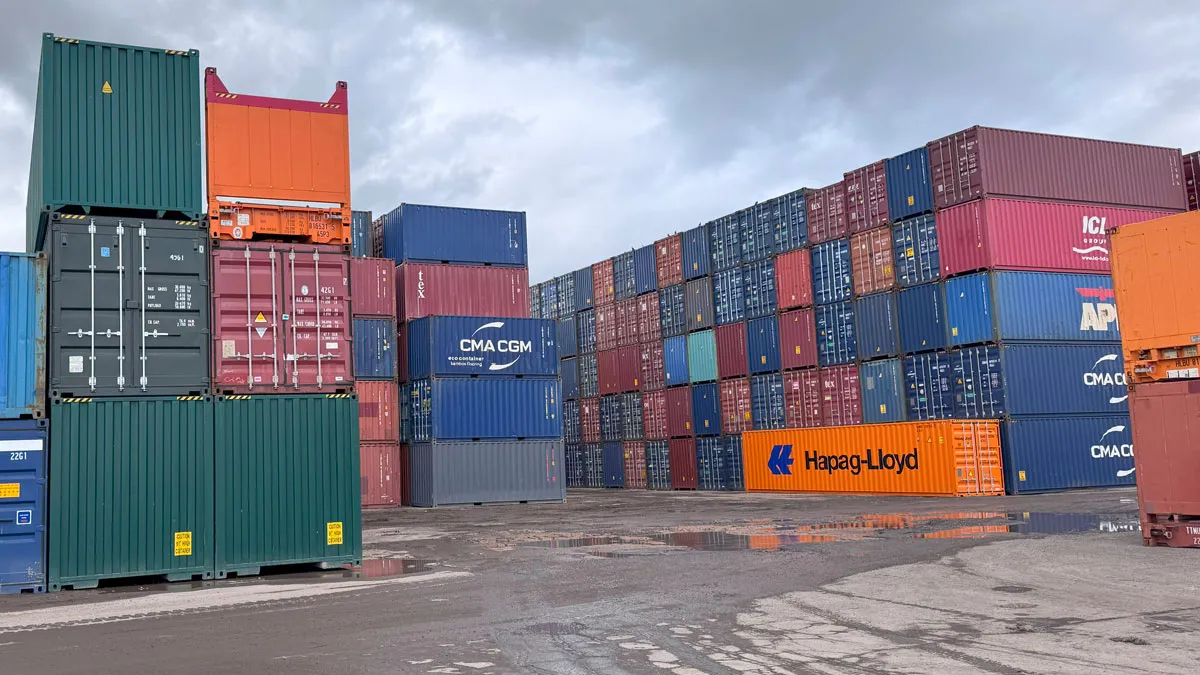
Shipping containers represent a vital asset for numerous businesses across the UK, offering robust and versatile solutions for storage, transport, and even conversion into functional spaces. Understanding the different types, uses, and considerations when acquiring or hiring these units proves crucial for making informed decisions that support operational efficiency and cost-effectiveness. This guide provides a detailed overview to equip businesses with the knowledge necessary to leverage shipping containers effectively.
Originally designed for the efficient global transport of goods via ship, rail, and road, shipping containers adhere to strict international standards (ISO standards). This standardisation ensures compatibility across different transport modes and handling equipment worldwide. Constructed primarily from Corten steel, also known as weathering steel, these containers offer exceptional durability and resistance to corrosion, making them ideal for harsh marine environments and long-term outdoor use.
The inherent strength and weather resistance of shipping containers have led to their widespread adoption beyond their original purpose. Businesses now utilise them for a diverse range of applications, including secure on-site storage, temporary offices, workshops, pop-up shops, and even modular building projects. Their portability allows for relatively easy relocation, providing flexibility for businesses with evolving needs or multiple sites.
While the standard dry van container remains the most common type, a variety of specialised containers exist to meet specific cargo requirements. Key types relevant to businesses include:
Businesses often require specific container sizes to match their available space or cargo volume. The 20ft shipping container offers a compact yet spacious option, suitable for many storage or smaller-scale transport needs. For larger volumes or more extensive storage requirements, the 40ft shipping container provides double the capacity.
Selecting the correct container type proves essential for ensuring the safety and integrity of the contents and optimising logistics.
Businesses in South Yorkshire needing shipping containers face the decision of whether to purchase or hire. Each option presents distinct advantages depending on the business's long-term requirements, budget, and usage frequency.
Hiring offers flexibility and a lower initial outlay, making it suitable for short-term projects, temporary storage needs, or businesses with fluctuating demands. When you hire a container, you pay a regular fee for the duration you need it, and the supplier typically handles maintenance and repairs. This eliminates the capital expenditure associated with purchasing and offers the ability to easily scale up or down the number of containers as required. Businesses in South Yorkshire seeking shipping container hire solutions benefit from readily available stock and responsive service.
Purchasing a shipping container represents a long-term investment. It proves more cost-effective for businesses requiring containers for extended periods or those planning significant modifications. Owning the container provides complete control over its use and allows for customisations without restrictions. While the upfront cost is higher, purchasing can offer better value over several years compared to continuous rental fees. Businesses in South Yorkshire looking to buy shipping containers can choose from new (one-trip) or used containers, with prices varying based on condition.
The decision between hiring and buying hinges on a careful assessment of the intended use duration, budgetary constraints, and the desire for customisation. Many businesses find that a combination of both hiring for temporary needs and buying for permanent solutions offers the most effective approach.
The versatility of shipping containers extends their utility across numerous business sectors. Their robust construction provides secure storage for equipment, inventory, or documents on construction sites, farms, and industrial facilities. Retailers use them for seasonal stock overflow or as temporary shop spaces. Educational institutions and community sports clubs often utilise them for storing sports equipment or maintenance gear.
Beyond simple storage, shipping containers readily adapt to more complex requirements through modification. This unlocks possibilities for creating functional workspaces:
Specialised sectors like the NHS and local councils also find value in shipping containers for various applications, including secure archiving, temporary clinics, or equipment storage at different facilities. Educational centres of learning use them for additional classroom space or storage.
Modified shipping containers offer businesses the opportunity to tailor units precisely to their operational needs. Common modifications include:
These modifications transform a standard steel box into a highly functional space, extending the container's utility far beyond basic storage. Professional container modification services ensure that alterations maintain the structural integrity and weather resistance of the unit.
Transporting and siting shipping containers requires careful planning. The size and weight of containers necessitate specialised transport via lorries, often requiring a HIAB crane for unloading and positioning at the delivery site. Businesses must ensure clear access for the delivery vehicle and sufficient space at the intended location for the container to be safely unloaded and placed.
The ground where the container will sit must be level and capable of supporting the significant weight of the container, especially when loaded. Preparation of the site beforehand prevents potential issues with stability and drainage. Considering potential future relocation needs also influences the initial siting decision.
While shipping containers are built to last, regular maintenance ensures their longevity and continued performance. Key maintenance activities include:
Proactive maintenance identifies minor issues before they escalate into costly repairs, extending the life of the container and protecting its contents.
The cost of purchasing a shipping container in the UK varies significantly based on size (e.g., 20ft or 40ft), condition (new 'one-trip' or used), and current market demand. Used containers are considerably cheaper than new ones, but their price depends on their age and overall condition. Obtaining a specific quote for your requirements provides the most accurate pricing.
New shipping containers, often referred to as 'one-trip' containers, have typically made just one journey from the point of manufacture (usually in Asia) carrying cargo. They are in excellent condition with minimal wear. Used containers have been in service for several years in the shipping industry and show signs of use, such as dents, rust patches, and repairs. While structurally sound, they are less aesthetically perfect than new containers.
Shipping containers are typically delivered on large flatbed lorries. Unloading and positioning at the delivery site usually requires a vehicle equipped with a crane, known as a HIAB lorry. It is crucial to ensure sufficient space and clear access for the delivery vehicle and the crane to operate safely at the intended location.
Whether planning permission is required for placing a shipping container on your property depends on several factors, including its intended use, how long it will be in place, and local planning regulations. In many cases, if used for temporary storage and not permanently fixed, it may not require permission. However, if used as a permanent structure or for business operations, it is advisable to check with your local council's planning department to confirm requirements.
Yes, shipping containers can be effectively insulated to improve temperature control and prevent condensation. Common insulation methods include spray foam, rigid insulation boards, or fibreglass batting, often combined with internal lining using plywood or plasterboard. Insulation makes containers suitable for sensitive storage, offices, or habitable spaces.
Shipping containers are built for durability and can last for many years, even decades, particularly with proper maintenance. Their Corten steel construction resists corrosion. While a container used continuously in the shipping industry might have a service life of around 10-15 years, a static container used for storage with good maintenance can last significantly longer, often 25 years or more.