
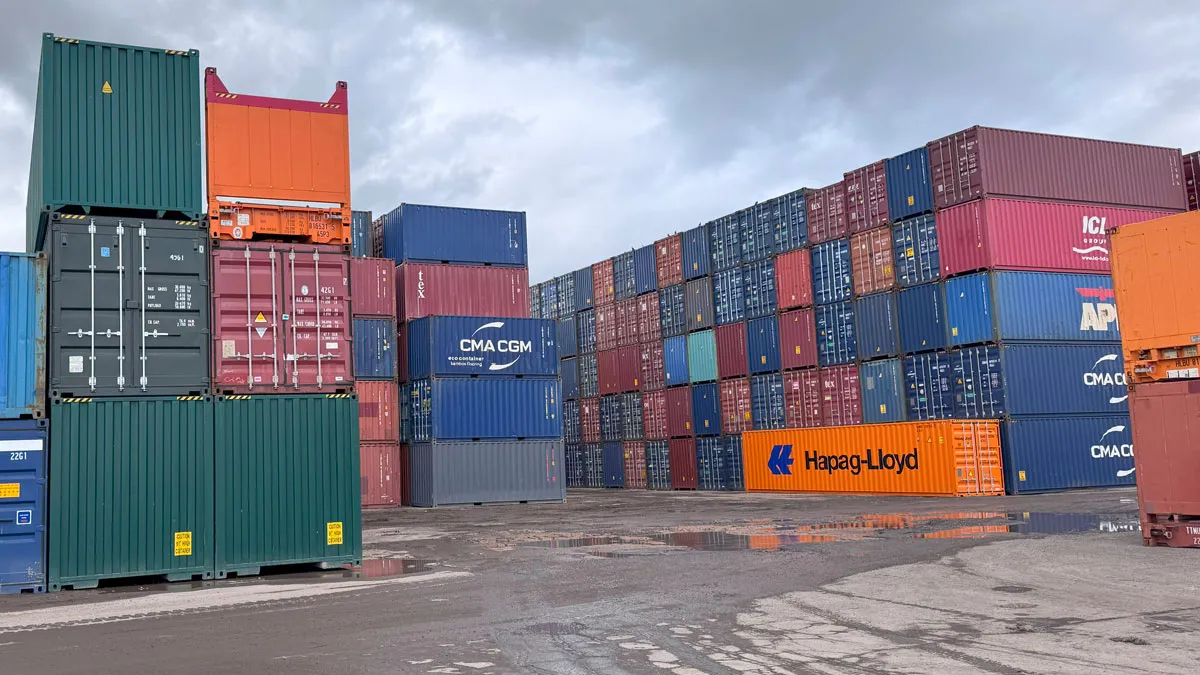
Shipping Containers: A Comprehensive Guide for UK Businesses
Understanding Shipping Containers
Shipping containers, also known as cargo containers, are indispensable assets for modern logistics and storage. Constructed from robust steel, they are designed to withstand the rigours of international transport, including harsh marine environments. Their standardised dimensions facilitate efficient handling and stacking across various modes of transport, including ships, trains, and trucks.
The primary function of a shipping container is to secure and protect goods during transit. This inherent strength and weather resistance also make them highly versatile for static applications, such as on-site storage, workshops, or even modified into office spaces.
Types of Shipping Containers for UK Businesses
Businesses in the UK can access a range of shipping container types, each suited to specific requirements. The most common is the standard dry van container, available in prevalent 20ft and 40ft lengths. These are ideal for transporting or storing general cargo that does not require temperature control.
Other specialised types include:
- Refrigerated (Reefer) Containers: Equipped with refrigeration units, these maintain precise temperatures for transporting perishable goods like food and pharmaceuticals.
- Open Top Containers: Featuring a removable roof, they allow for easy loading of oversized cargo from the top.
- Flat Rack Containers: These have collapsible sides or no sides at all, designed for transporting heavy or bulky items that do not fit within standard container dimensions.
- Tank Containers: Used for transporting liquids, gases, or powders in bulk.
Selecting the appropriate container type is crucial for ensuring the safety and integrity of the goods being transported or stored.
Shipping Container Dimensions and Specifications
Standardisation is a key feature of shipping containers, governed by international ISO standards. This ensures compatibility across global transport networks. While external dimensions are largely consistent, internal dimensions can vary slightly between manufacturers.
Common Container Sizes:
- 20ft Container: Approximately 20 feet long, 8 feet wide, and 8.5 feet high. Offers around 1,170 cubic feet of internal volume.
- 40ft Container: Approximately 40 feet long, 8 feet wide, and 8.5 feet high. Provides roughly 2,390 cubic feet of internal volume.
- 40ft High Cube Container: Similar to the 40ft standard but with an increased height of 9.5 feet, offering greater cubic capacity (around 2,700 cubic feet).
Understanding these dimensions helps businesses determine how much cargo or equipment a container can hold and whether it fits within available space at their premises.
New vs. Used Shipping Containers
UK businesses have the option to purchase or hire new or used shipping containers. Each offers distinct advantages.
New (One-Trip) Containers:
These containers have typically completed one journey from their manufacturing location. They are in excellent condition, showing minimal signs of wear. New containers offer the longest lifespan and best aesthetic appearance, making them suitable for storage where presentation is important or for container conversions.
Used Containers:
Used containers come in varying conditions, often categorised based on their suitability for shipping or storage. Cargo-worthy (CW) containers are certified for international transport, while wind and watertight (WWT) containers are guaranteed to be free from leaks and suitable for secure static storage.
Used containers represent a more budget-friendly option, particularly for storage purposes where certification for shipping is not required. Their condition reflects their history of use, and they may exhibit dents, surface rust, or repairs. Despite this, a well-maintained used container provides reliable and secure storage for many years.
Purchasing Shipping Containers in the UK
Buying a shipping container offers a long-term storage or operational solution. Businesses gain full ownership and control over the container's use and modification. The purchase price varies based on the container's size, condition (new or used), and current market demand.
When buying, consider the intended use, available budget, and required lifespan. A reputable supplier provides clear information on the container's condition and history. Acorn Containers offers a range of shipping containers for sale across the UK, ensuring quality and competitive pricing.
Hiring Shipping Containers in the UK
Hiring a shipping container provides flexibility, making it an excellent option for short-term needs, seasonal storage, or projects with uncertain durations. Hiring avoids a large upfront investment and shifts maintenance responsibilities to the supplier.
Rental terms are typically flexible, ranging from a few weeks to several years. The hire cost is usually a recurring fee, plus transport to and from the site. This model is ideal for businesses requiring temporary storage solutions or wishing to assess their storage needs before committing to a purchase. Acorn Containers offers flexible shipping container hire options tailored to business requirements.
Shipping Container Modifications and Conversions
Shipping containers are highly adaptable and serve as the foundation for numerous modifications and conversions. Their robust structure allows for the addition of doors, windows, insulation, electrical systems, and HVAC units, transforming them into functional spaces.
Popular container conversions include:
- Site offices and welfare units
- Workshops and equipment storage
- Retail units and pop-up shops
- Canteens and break rooms
- Secure storage facilities with enhanced security features
Modified containers provide cost-effective and rapidly deployable solutions for businesses needing custom spaces on-site. Acorn Containers possesses expertise in container modifications, delivering bespoke solutions to meet specific operational needs.
Transportation and Delivery of Shipping Containers
Transporting shipping containers requires specialised vehicles and expertise. Delivery to your site involves careful planning, considering access routes, site conditions, and the required placement method.
Containers are typically transported using lorries equipped with tilt trailers or cranes. Site access must accommodate the length and weight of the lorry and container. The delivery site must be level and firm enough to support the container's weight, especially when loaded.
A professional supplier manages the logistics of delivery, ensuring the container arrives safely and is positioned correctly on your site. Acorn Containers organises efficient transport and delivery across the UK, providing a seamless service from order to placement.
Frequently Asked Questions About Shipping Containers
How much does a shipping container cost in the UK?
The cost varies significantly based on whether you are buying or hiring, the size and condition (new or used) of the container, and current market conditions. Transport and delivery costs also factor into the total price. Contacting a supplier directly provides the most accurate current pricing.
What is the difference between a wind and watertight (WWT) and a cargo worthy (CW) container?
A Wind and Watertight (WWT) container is guaranteed to be structurally sound and free from leaks, suitable for static storage. A Cargo Worthy (CW) container meets international standards for shipping and has a valid CSC plate, certifying it for international transport.
Do I need planning permission for a shipping container on my property in the UK?
In many cases, shipping containers used for temporary storage are considered temporary structures and may not require formal planning permission, especially if placed within the curtilage of an existing building. However, regulations vary by local authority and intended use. Always consult your local council's planning department to confirm specific requirements for your location and proposed use.
How long will a shipping container last?
With proper maintenance, a new shipping container can last for 25-30 years or even longer. Used containers have a lifespan dependent on their initial condition and ongoing care. Regular inspection and maintenance, particularly addressing surface rust, help prolong the life of any container.
Can shipping containers be insulated?
Yes, shipping containers can be easily insulated using various methods including spray foam, rigid panels, or fibreglass insulation. Insulation is essential if the container is used as an office, workshop, or for storing sensitive goods that require temperature stability.
What foundation is needed for a shipping container?
While a perfectly level concrete pad is ideal, containers can be placed on various stable surfaces. Key requirements are a level area and support points under the four corner castings to distribute the weight evenly and prevent the container from sinking. Options include concrete pads, asphalt, compacted gravel, or even placed directly on firm, level ground with appropriate support blocks.
Are shipping containers secure?
Yes, shipping containers are inherently secure due to their robust steel construction and strong doors with locking mechanisms. For enhanced security, padlocks can be added to the door handles. Many businesses also opt for a 'lock box' or 'cowl' welded over the padlock to prevent tampering with bolt cutters.