Self Storage Businesses Nuneaton
Acorn offers premium shipping containers in Nuneaton for individuals aiming to establish a self-storage business. Discover our reliable solutions tailored to your needs.

Acorn offers premium shipping containers in Nuneaton for individuals aiming to establish a self-storage business. Discover our reliable solutions tailored to your needs.
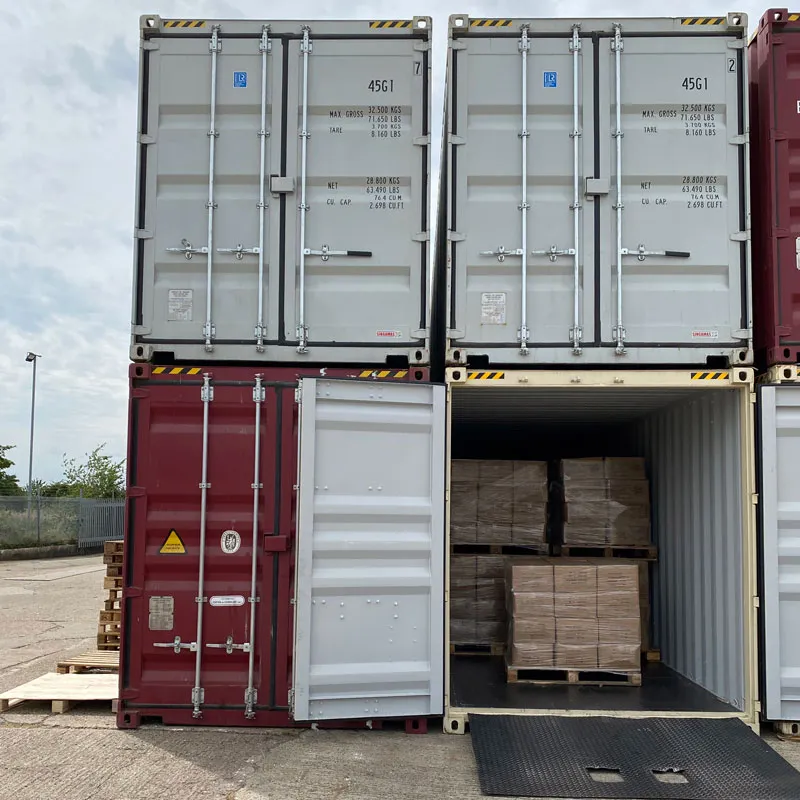
Shipping containers form the backbone of global trade, facilitating the movement of goods across vast distances. Originally designed for maritime transport, their inherent strength, durability, and modular nature have led to widespread adoption for numerous static applications. Acorn Containers leverages these qualities, providing high-quality shipping containers for sale and hire to businesses across the UK, including a dedicated service for clients in Nuneaton. Understanding the various types, sizes, and potential uses of shipping containers is crucial for businesses seeking efficient and reliable storage or operational space solutions. We offer a comprehensive range of options, from standard dry vans to specialised units, all available for prompt delivery across the region.
The shipping container industry offers a diverse range of container types, each designed for specific cargo or application requirements. Businesses must select the appropriate container type to ensure safe and efficient handling of their goods or to meet their specific operational needs.
Shipping containers come in internationally standardised sizes, facilitating intermodal transport and handling across different modes of transport. The most common lengths are 20ft and 40ft, though other sizes exist to meet specific market demands.
Understanding the dimensions and capacity of each size helps businesses optimise their logistics and storage strategies.
Beyond international shipping, containers offer versatile solutions for a multitude of business applications in the UK. Their robust construction and weather resistance make them ideal for various static uses.
Businesses commonly use shipping containers for secure on-site or off-site storage. They provide robust protection for equipment, inventory, tools, and documents. Their steel structure deters theft and protects contents from environmental damage. This is particularly beneficial for sectors like construction sites needing secure tool storage, farms requiring seasonal equipment storage, or self-storage businesses expanding their capacity in Nuneaton.
Modified shipping containers serve as excellent structures for temporary or permanent retail spaces, cafes, and exhibition stands. Their modular nature allows for easy transportation and rapid deployment, providing businesses with flexible retail options in various locations. Businesses in urban centres or at events find this a compelling solution.
Containers transform into functional workshops or creative studios. Customisation with insulation, lighting, and power outlets creates a comfortable and productive environment for various trades or artistic pursuits. This offers a cost-effective alternative to traditional building construction.
On construction sites or remote locations, modified containers provide essential office space, welfare facilities, or meeting rooms. They offer a secure and climate-controlled environment for site management and staff needs. Local councils and large organisations often utilise these for temporary facilities.
Containers can be adapted to create changing rooms, equipment storage, or clubhouses for sports clubs and community groups. Their durability withstands heavy use and outdoor conditions.
Increasingly, containers provide temporary or permanent classroom space for educational institutions or modular units for healthcare facilities like the NHS. They offer a quick and cost-effective way to expand capacity.
Businesses have the option to either buy or hire shipping containers, depending on their specific needs and long-term plans.
The decision to buy or hire depends on factors such as the duration of need, budget constraints, and the intended application of the container.
Moving shipping containers requires specialised equipment and expertise. Acorn Containers manages the entire transportation process, ensuring safe and efficient delivery to your specified location.
We utilise HIAB vehicles (trucks equipped with a crane) for lifting and placing containers precisely where needed. This service is essential for sites without their own lifting capabilities. Our experienced drivers and operators ensure the container arrives safely and is positioned correctly, even in challenging locations. Proper site access and ground conditions are critical for successful delivery.
Acorn Containers has established itself as a trusted provider of high-quality shipping containers to UK businesses. We offer a comprehensive service covering sales, hire, modification, and delivery.
For businesses in Nuneaton and across the UK, Acorn Containers provides a dependable partner for all shipping container requirements, whether for storage, operational space, or bespoke projects.
Shipping containers are typically constructed from Cor-Ten steel, also known as weathering steel. This high-strength steel is designed to resist corrosion, making it ideal for the harsh maritime environment and ensuring the container's longevity.
With proper maintenance, shipping containers can last for many years. Containers used in shipping may have a lifespan of 10-15 years before being retired from sea service, but they can then be repurposed for static storage or other applications for several decades.
Yes, shipping containers can be effectively insulated. Common insulation methods include spray foam, rigid panels, or fibreglass. Insulation is crucial for static applications where temperature control is required, such as offices, workshops, or storage for sensitive items.
Whether you need planning permission depends on the intended use, location, and duration the container will be on site. For temporary placement or storage within the curtilage of an existing business, it may not be required. However, for permanent structures, conversions, or placement in residential areas, planning permission is often necessary. Always check with your local council in Nuneaton or the relevant planning authority.
Shipping containers are typically delivered using specialised vehicles, most commonly trucks equipped with a HIAB crane. The HIAB arm lifts the container off the truck and places it onto the ground. This requires sufficient space for the truck to manoeuvre and the crane to operate, as well as firm, level ground for placement.
Yes, buying a used shipping container is a popular and cost-effective option. Used containers are graded based on their condition, from 'cargo worthy' suitable for shipping to 'wind and watertight' suitable for storage. Acorn Containers offers a range of quality used containers.
The primary difference is height. Standard containers are typically 8 feet 6 inches tall, while high cube containers are 9 feet 6 inches tall. This extra foot of height provides increased internal volume, making high cubes suitable for taller items or applications requiring more headroom.
Yes, shipping containers are designed to be stacked and can also be joined together horizontally or vertically to create larger structures. Special connectors and structural modifications are used to ensure stability and integrity when joining or stacking containers for static applications.