Self Storage Businesses Weston Super Mare
Acorn offers shipping containers for individuals aiming to establish a self-storage business in Weston-super-Mare. Discover our reliable solutions for your entrepreneurial venture.

Acorn offers shipping containers for individuals aiming to establish a self-storage business in Weston-super-Mare. Discover our reliable solutions for your entrepreneurial venture.
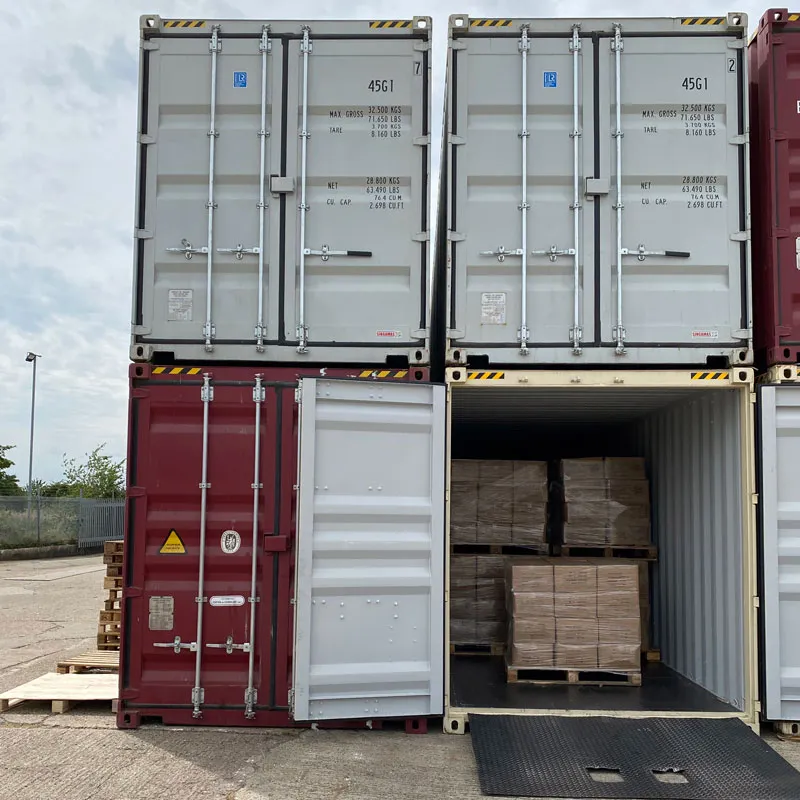
Shipping containers represent a cornerstone of global trade and logistics, offering robust, standardised units for transporting goods across vast distances by sea, road, and rail. Their inherent strength and uniform dimensions make them incredibly versatile assets, extending their utility far beyond their initial shipping purpose. Businesses across the UK, including those operating in Weston-super-Mare, increasingly utilise these structures for a wide array of applications, from secure storage solutions to innovative construction projects. Understanding the characteristics and potential uses of different container types empowers businesses to make informed decisions that can significantly impact operational efficiency and cost-effectiveness.
The shipping industry primarily relies on a few standard container types, each designed to meet specific cargo requirements. The most common are dry van containers, used for transporting general cargo. These come in standard lengths, with the 20ft container and the 40ft container being the most prevalent. High cube containers, slightly taller than standard units, offer additional vertical space, proving particularly useful for lighter, bulkier goods.
Dimensions are standardised under ISO (International Organisation for Standardisation) regulations, ensuring compatibility with handling equipment and transport systems worldwide. A standard 20ft container measures approximately 20 feet long, 8 feet wide, and 8 feet 6 inches high externally, providing around 33 cubic metres of internal volume. A 40ft standard container doubles the length, offering roughly 67 cubic metres of volume. High cube versions add an extra foot in height, increasing their volume capacity.
Specialised containers cater to specific cargo needs. Refrigerated containers, or 'Reefers', maintain precise temperature control for perishable goods. Open-top containers facilitate loading of oversized items from above, while flat rack containers, with collapsible sides, accommodate unusually shaped or heavy cargo. Tank containers transport liquids or gases safely. Selecting the correct container type is crucial for efficient and secure transportation or storage.
Businesses acquiring shipping containers can choose between new and used units, each presenting distinct advantages depending on the intended application and budget. New (or 'one-trip') containers have typically completed a single journey from their manufacturing origin, usually in Asia, carrying cargo to their destination. They exhibit minimal wear and tear, offering excellent structural integrity and a pristine appearance. New containers represent the premium option, providing the longest lifespan and highest security levels, ideal for modifications, long-term storage, or applications where aesthetics are important.
Used containers, often graded based on their condition, offer a more budget-friendly alternative. The most common grade is 'cargo worthy', meaning the container remains structurally sound and wind and watertight, suitable for continued international shipping. 'Wind and watertight' (WWT) containers guarantee protection from the elements but may not meet the stringent structural requirements for shipping cargo internationally. 'As is' containers represent the lowest grade, potentially requiring repairs and best suited for static storage where appearance and absolute integrity are less critical.
Choosing between new and used containers involves balancing initial cost against expected lifespan, required condition, and specific use case. For instance, a business needing secure, long-term storage for sensitive equipment might opt for a new or cargo-worthy container, while a construction site requiring temporary, basic storage for materials could find a WWT unit perfectly adequate in Weston-super-Mare.
The inherent durability and modular nature of shipping containers make them exceptionally adaptable for numerous business applications beyond their original maritime purpose. Businesses in Weston-super-Mare and across the UK leverage containers for:
The potential for customisation is vast, allowing businesses to tailor containers precisely to their operational needs, adding features like personnel doors, windows, insulation, electrical fit-outs, and bespoke shelving systems.
Businesses in the UK can acquire shipping containers through purchase or hire. Purchasing a container represents a long-term investment, providing full ownership and the freedom to modify the unit as needed. This option suits businesses requiring permanent storage, planning extensive modifications, or those in sectors like local government needing long-term, fixed assets. Several factors influence purchase price, including the container's size, condition (new or used grade), any modifications, and current market demand.
Hiring containers offers flexibility and lower upfront costs, making it ideal for short-term projects, seasonal needs, or businesses wishing to avoid significant capital expenditure. Hiring often includes maintenance, reducing the burden of upkeep. The hire duration and container type primarily determine rental costs. Both purchase and hire options are readily available for businesses in Weston-super-Mare.
Regardless of whether you choose to buy or hire, arranging delivery to your site is a critical step. This typically involves specialist HIAB delivery services, using vehicles equipped with cranes to lift and position the container precisely where required. Assessing site access and ground conditions beforehand ensures a smooth and successful delivery.
A new shipping container designed for international shipping can last for 25-30 years or more with proper maintenance. When repurposed for static storage or modified uses, their lifespan can extend even further as they are not subjected to the stresses of sea travel.
Yes, containers graded as 'cargo worthy' or 'wind and watertight' are designed to be fully watertight, protecting contents from the elements. Their steel construction makes them inherently secure, and additional locking mechanisms can further enhance security.
Whether you need planning permission depends on how you intend to use the container and its location. Using a container for temporary storage on private land often does not require permission. However, placing a container in a visible location, using it as a permanent structure (like an office or retail unit), or placing it within a conservation area or on listed building grounds likely requires consultation with your local council planning department.
Shipping containers are typically delivered using specialist vehicles equipped with cranes, known as HIABs (Hook Loader or Hydraulic Arm). The vehicle lifts the container off the truck and places it directly onto the ground in the desired location, provided there is adequate access and a firm, level surface.
Absolutely. Shipping containers are highly versatile and can be extensively modified. Common modifications include installing personnel doors, windows, insulation, electrical wiring, lighting, ventilation, shelving, and custom paint finishes to suit specific business needs and branding.
The primary difference lies in height. Standard containers are typically 8ft 6in high, while high cube containers are 9ft 6in high. This extra foot in height offers increased internal volume, making high cubes suitable for storing or transporting taller items or maximising cubic capacity for lighter goods.