
Secure Storage Schools Edinburgh
Schools in Edinburgh often need secure, weather-resistant storage for equipment that does not fit neatly into a storeroom, shed, or basement. That can include PE kit, sports goals, exam furniture, archive boxes, maintenance tools, cleaning stock, event equipment, and temporary materials during works or room moves. A steel storage container gives a locked, self-contained space that can sit on a hardstanding or prepared yard and be accessed when staff need it.
The right unit depends on how long it will stay on site, how often staff need access, and how much room you have for delivery and placement. For short-term needs, see container hire in Edinburgh. For a longer-term solution, see container sales in Edinburgh. Delivery planning is covered on the container delivery page, and the most common sizes are shown on the 20ft container and 40ft container pages.
Edinburgh adds a few practical constraints that matter at school level. Many sites have narrow access roads, controlled parking, tight turning space, or limited set-down areas. City-centre schools can be harder to reach than sites closer to the A720 City Bypass, the A1, the A8, or the A90 corridor. Schools near Leith, the New Town, Portobello, Corstorphine, or other built-up districts may need a smaller vehicle and a clear plan for lifting the box into place.
- Use hire when the storage need is linked to building works, decanting, or seasonal overflow.
- Use purchase when the container will stay in place long-term and needs shelving, lighting, or a fitted lockbox.
- Choose the container size around access first, then storage volume.
- Plan delivery around school opening times, pedestrian flow, and any shared access routes.
Choosing size and container type
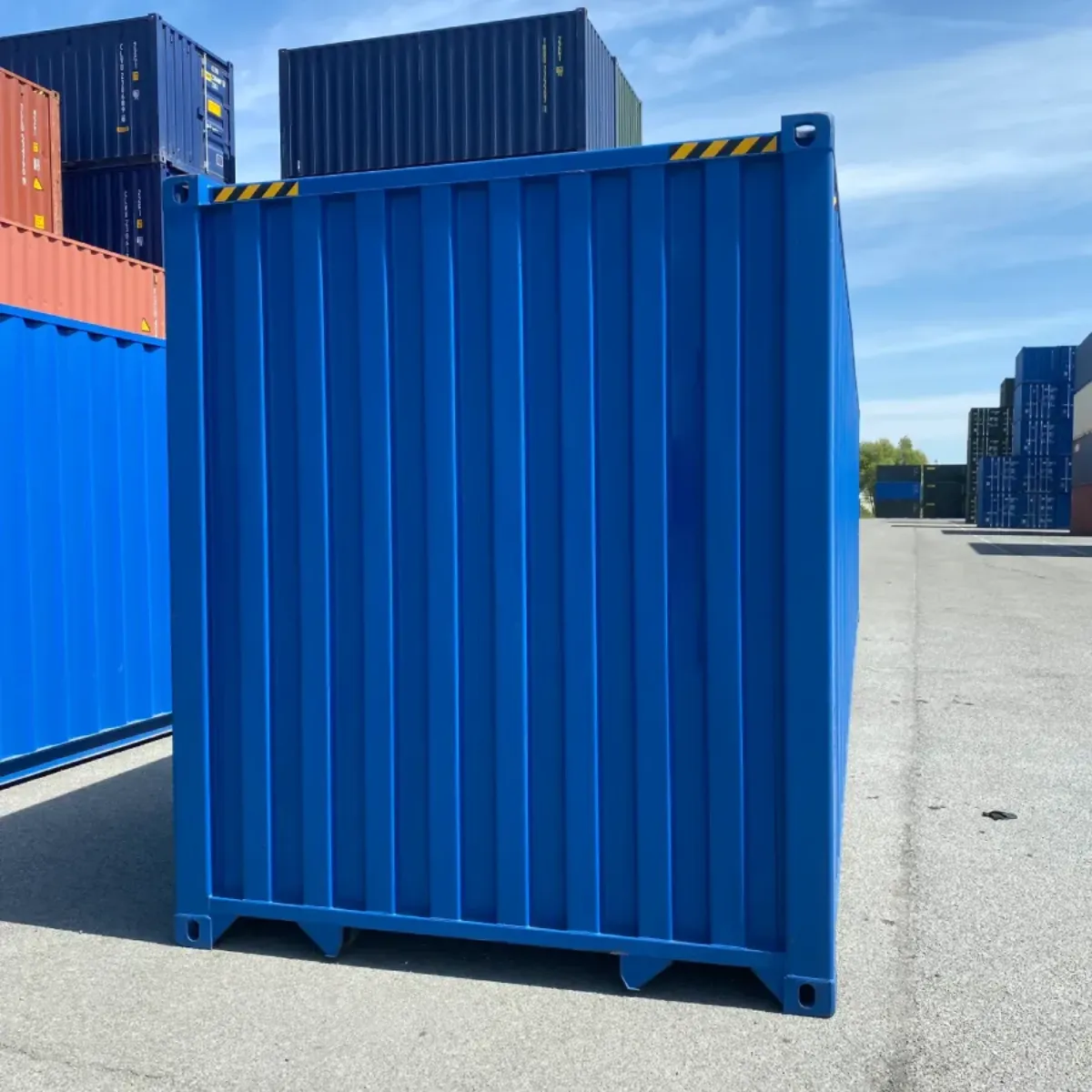
For school storage, the common starting point is a dry freight container, which is the standard sealed steel box used for general cargo. It has double doors at one end, steel corner castings for lifting, and a timber or plywood floor suitable for boxed or palletised goods. For most schools, the decision is between 10ft, 20ft, and 40ft units, with a high cube option if internal height is important.
Typical sizes and uses
- 10ft container - useful where space is tight or access is limited. Good for archive boxes, tools, consumables, and smaller PE stores.
- 20ft container - the most common choice for school grounds. It is about 6.06m long, 2.44m wide, and 2.59m high externally, with a usable internal length of about 5.90m.
- 40ft container - about 12.19m long, 2.44m wide, and 2.59m high externally. Best when the school needs large-volume storage and has the yard space to place it safely.
- High cube container - similar footprint to a standard unit but with extra height, useful for bulky items, racks, or awkward equipment.
Door opening matters as much as overall size. The clear opening is narrower than the full external width, so shelving, trollies, and awkward items need to be measured against the door aperture, not just the box length. If a school needs regular access for boxes on trollies, allow room to turn inside the container and keep the first row of storage clear of the door swing.
Smaller units suit schools with constrained urban yards and limited vehicle movement. Larger units can reduce clutter, but they need better access and more prepared ground. If you are unsure which size fits your site, compare the actual box footprint with the available hardstanding, then check the approach route and clearance on the day of delivery.
Hire versus buy for school storage
Hire is often the simplest option when the storage need is tied to a known project. That can include roof repairs, classroom reconfiguration, playground resurfacing, boiler replacement, or a temporary decant of equipment while rooms are being refurbished. It also suits schools that only need external storage for part of the year, such as sports kit, staging, or event kit.
Buying makes more sense when the container will remain on site for years, when staff need to fit it out with shelving, or when the school wants full control over colour, security fittings, ventilation, and layout. A purchased unit can be adapted for frequent access, labelled zones, and internal racking without worrying about return condition at the end of a hire period.
Lead times depend on stock, modifications, and delivery access. Standard units can often move faster than modified boxes, but the site still needs to be ready. If a container has to arrive during a holiday window, book early so the delivery vehicle, school access, and ground preparation are all in place before term starts again.
- Confirm what needs storing and how often staff will access it.
- Measure the available ground and the route from the road or yard entrance.
- Choose hire or purchase based on duration, fit-out, and site control.
- Check the delivery method and arrange any permissions or supervision needed on site.
- Agree a date that avoids school drop-off, pick-up, and high footfall periods.
Condition grades, security, and compliance
Condition matters because it affects both use and maintenance. One-trip means the container has made one cargo journey from manufacture before resale, so it usually has a cleaner interior and fewer repairs. Cargo worthy means it has been inspected and is suitable for continued freight use. Wind and watertight means the container keeps out rain and weather, but it may still show cosmetic wear. IICL is an industry inspection standard used to judge repair level and condition. CSC plate means the safety approval plate that shows the container is certified for transport.
For school storage, a one-trip or a sound cargo-worthy unit is often the most practical choice because it reduces interior damage, odour, and the chance of old repairs affecting doors or seals. A wind and watertight box can be fine for dry storage if the floor, door seals, and structure are sound. If the school will store paper records, textiles, or sensitive equipment, a cleaner interior and better seals are worth prioritising.
Security should be planned as a system, not as a single lock. A fitted lockbox protects the padlock shackle from attack, while good site lighting, CCTV, fencing, and clear sight lines reduce opportunistic damage. Internal shelving can also help because it keeps valuable items off the floor and makes access easier for staff without leaving the doors open for long periods.
If the container may later move into freight use, or if it is likely to be transferred through a port such as Leith Docks, the CSC plate matters. The international safety rules are set out through the IMO CSC container testing treaties. If haulage or collection is arranged through a transport partner, freight responsibility should be clear from the start. BIFA explains standardised freight liability terms used across the freight industry, which helps when a school or contractor needs to understand who is responsible for damage, delay, or handling at each stage.
Tare is the empty weight of the container and payload is the safe load it can carry. That matters if the school plans to store dense archive boxes, metal equipment, or shelving units inside the box, because the floor and access route must suit the total load, not just the box size.
Delivery, access, and placement in Edinburgh
Delivery planning is usually the point where school projects succeed or stall. Edinburgh has a mix of compact urban roads, historic frontages, residential restrictions, and larger edge-of-city routes. Schools close to the centre may have tighter access than sites near Gogar, Newbridge, Sighthill, Seafield, or other industrial and mixed-use areas. Even on a large campus, the final approach can be restricted by trees, parked cars, low walls, soft ground, or overhead lines.
For a clear view of vehicle types and gross vehicle weight limits, consult the government guide on Lorry Types and Weights. That matters because a 20ft or 40ft unit may travel on different vehicles depending on whether the delivery uses a HIAB, which is a lorry fitted with a hydraulic crane, or a side-loader, which lifts the container from the trailer.
Practical site checks before delivery
- Measure gate widths, entrance heights, and turning space.
- Check whether the access route includes tight bends, parked cars, bollards, or height limits.
- Confirm the ground is firm, level, and able to take the vehicle and the container.
- Keep doors, paths, and the set-down area clear of pupils and staff on the day.
- Check for underground services, drains, inspection covers, or shallow utilities where the unit may sit.
Placement should leave enough room for the doors to open fully and for staff to load equipment without blocking walkways. On a school site, a firm base is better than soft grass because it reduces settlement and door misalignment. A compacted hardcore pad, concrete slab, or reinforced paving area is usually more stable than a loose or damp surface. If drainage is poor, place the box so rainwater runs away from the doors rather than into them.
On busy Edinburgh sites, a HIAB is often the best option because it can lift the container over a fence or into a tight yard with more precision than a larger trailer-only delivery. A side-loader can work well where there is room to set the trailer alongside the final position. The best method depends on the route, the available standing area, and the weight and length of the container chosen.
Condensation, maintenance, and aftercare
Condensation is a practical issue in any steel container, especially in Edinburgh, where cool nights, damp weather, and temperature changes can cause moisture to form inside the box. Schools storing paper records, sports equipment, uniforms, or folded fabric should plan for airflow and dry storage from the start. Ventilation helps, but so does simple day-to-day discipline. Keep wet items out, use shelving or pallets, and avoid placing archive boxes directly on the floor.
Useful controls include roof or wall vents, desiccant packs for sensitive materials, and regular checks after heavy rain or freezing weather. If the container is used for long-term storage, staff should inspect the floor near the doors, the door seals, and the underside of the unit for signs of water ingress or surface corrosion. Small paint chips are easier to deal with early, before rust reaches seams or fittings.
Routine maintenance is straightforward:
- Lubricate hinges and locking bars at regular intervals.
- Check that the lockbox and padlock remain free of damage.
- Clear snow, leaves, and standing water from the access side.
- Keep the area around the container tidy so staff can reach it safely.
- Review internal storage layout at the start of each term to keep access clear.
Aftercare should also cover changing needs. Schools do not keep the same storage pattern forever. Sports teams expand, building works finish, archive volumes grow, and holiday clubs move equipment in and out. Ongoing support can include repositioning, replacing a lockbox, adding shelving, or checking whether a hire unit should be kept, swapped, or collected. Acorn Containers can help with that practical follow-up so the box continues to match the site rather than becoming an obstacle.
FAQ
What size container is best for a school in Edinburgh?
A 20ft container suits many school sites because it balances storage volume with access requirements. A 10ft unit works better where the yard is tight, while a 40ft unit is only sensible if the site has enough space for delivery, placement, and safe loading.
Is hire or purchase better for school storage?
Hire is usually better for temporary works, decants, or seasonal overflow. Purchase is preferable when the container will stay on site, requires shelving or security upgrades, or must be managed as part of the school estate for a longer period.
Can a container be delivered to a restricted Edinburgh school site?
Often yes, but the delivery method must suit the access route. A HIAB can place a container more precisely than a trailer-only vehicle, but the route, turning space, ground strength, and overhead clearance still need to be checked before the delivery is booked.
How do you reduce condensation in a storage container?
Use vents, keep damp items out, store materials on shelving or pallets, and check the interior after weather changes. For paper records or textiles, good airflow and a dry floor are more important than cosmetic condition alone.
What condition should a school choose?
One-trip is usually best for cleaner interiors and easier day-to-day use. Cargo-worthy is acceptable if the structure and doors are sound. Wind and watertight can be suitable for dry storage, but it should still be checked for floor condition, seals, and any past repairs that affect use.
