
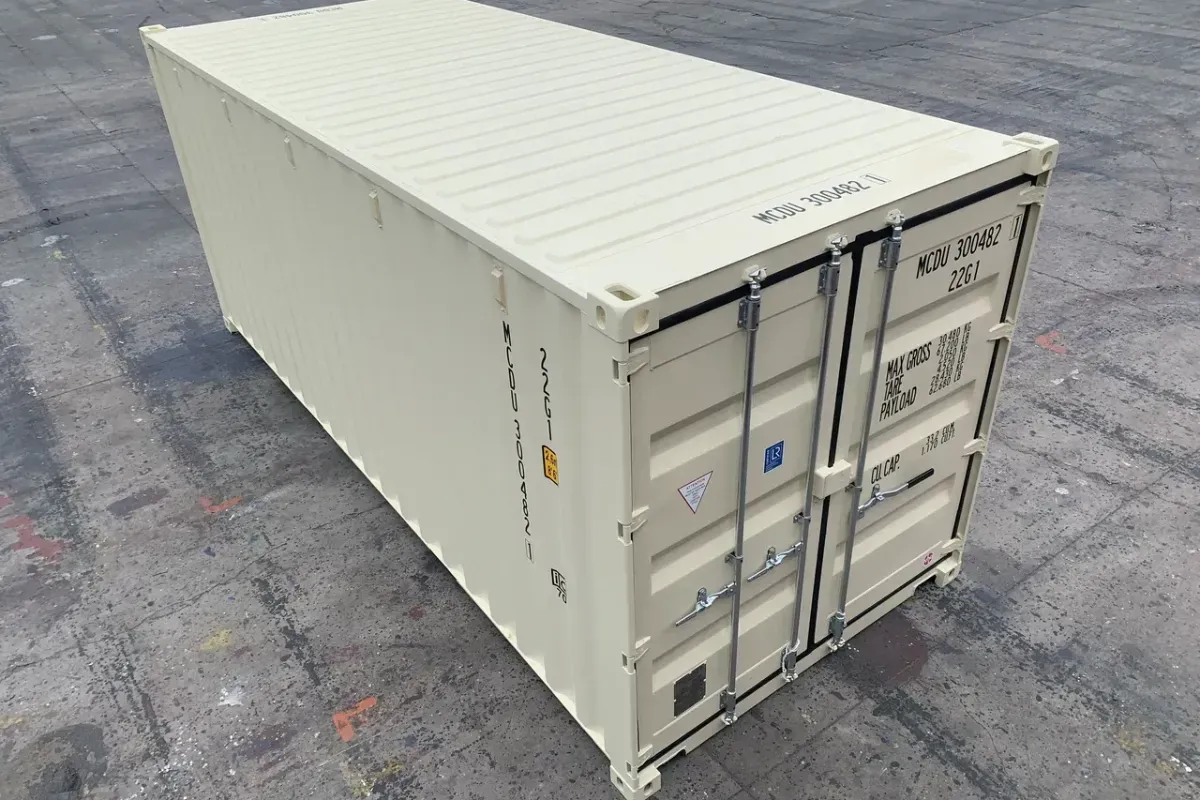
20ft Container Hartlepool
A 20ft container is the standard choice for secure storage and transport where space, access and weight all matter. In Hartlepool, that usually means work around the port, marine services, engineering yards, construction compounds, trade storage, and site storage where equipment needs to stay dry, locked and easy to reach. Acorn Containers supplies containers for hire and purchase with delivery planning based on the site, the road access and the intended use.
The standard 20ft dry container has an external footprint of about 6.06m long, 2.44m wide and 2.59m high. The door-opening is smaller than the internal floor space, so loading needs to be checked against the door aperture as well as the overall size. A typical unit provides enough room for palletised stock, tools, materials, furniture or business records, while still being short enough for many yards and driveways where a 40ft unit would be difficult to place.
For most buyers and hirers, the first decision is not only size but how the container will be used. If the unit is needed for a few months while work is underway, container hire in Hartlepool can be the simpler option. If the box is likely to stay on site for years, container sales in Hartlepool may be the better fit. If you are still comparing footprint and capacity, a longer unit may be worth considering through 40ft containers in Hartlepool.
Why a 20ft container suits Hartlepool sites
A 20ft container offers a practical balance between capacity and access. In and around Hartlepool, that matters because many sites combine older industrial layouts with newer commercial yards, port-adjacent compounds and residential accesses that do not suit larger lorries or longer units. A 20ft box is often the largest format that can be positioned without major site changes.
Typical uses
- Tools and materials for builders, fit-out teams and trades
- Marine and port-related spares, ropes, fittings and consumables
- Warehouse overflow, seasonal stock and pallet storage
- Equipment storage for schools, clubs and community organisations
- House moves, renovation storage and garden equipment
- Workshops where a secure steel shell is needed before internal fit-out
When 20ft is the right size
A 20ft unit is usually the right starting point when the load is palletised, the goods are not unusually tall, and the site needs secure storage without taking over the whole yard. It can take around 11 Euro pallets on the floor, subject to how the load is arranged and whether access needs to be left down one side.
If the load includes long items, tall plant or hand access from above, another container type may suit better. Open-top containers help when loading from the roof is easier, while flat racks are better for oversized plant, machinery and awkward shapes. For goods that need controlled temperature, see refrigerated containers.
Container types and condition grades
Choosing the right container type matters as much as choosing the right length. A standard 20ft dry container is the usual enclosed steel box with double cargo doors at one end. It is the default option for storage and most freight uses. For Hartlepool customers working near the coast or on exposed industrial land, condition and corrosion protection often matter more than cosmetic finish.
Common condition grades
- One-trip means the container has made one cargo journey from the factory before sale. It is usually the cleanest option and has the least wear.
- Cargo worthy means the container is suitable for shipping cargo again if it passes a structural inspection. The shell may show marks, repairs or paint wear.
- Wind and watertight means the unit keeps out rain and draughts, but may not meet the standard needed for sea export. It is often used for storage.
- IICL is a lessor grade based on inspection standards used by the Institute of International Container Lessors. It usually indicates a higher repair standard than a basic storage box.
A CSC plate is the safety approval plate fixed to the container, and it shows that the unit has passed the required structural inspection for international transport. For the official convention and testing framework, see the IMO guidance on CSC container approval.
In practice, a one-trip unit is usually preferred where appearance, door operation and easier cleaning matter. A cargo-worthy or wind and watertight unit can be more suitable for plain storage, provided the floor is sound, the doors seal correctly and the locking gear works without strain. If you want a box with more visible wear but solid structure, ask for clear photos of the roof, corner castings, floor and door seals before you commit.
What to check before you choose
- Door operation and whether the locking bars run smoothly
- Floor condition, especially if fork lift traffic will cross the threshold
- Roof dents or repair patches if the unit will be stacked or externally exposed
- Seal condition on the doors and around the frame
- Corner castings if the container may be lifted, stacked or shipped
Hire or buy a 20ft container
The choice between hire and purchase depends on how long the container will stay in use, how much modification is needed and whether the container needs to move between sites. For many businesses in Hartlepool, hire suits temporary storage during a project, while purchase suits long-term yard storage or a fixed asset that will be used repeatedly.
Hire suits when
- The need is temporary, such as a building project or seasonal peak
- The site layout may change and the container may need collecting later
- You want a straightforward container without committing to ownership
- Maintenance and eventual removal should sit with the supplier
Buy suits when
- The container will stay on site for a long period
- You want to fit shelving, power, lighting or a specific layout
- The unit may be moved between sites or kept as a permanent asset
- You want full control over repainting, security fittings and ongoing upkeep
For businesses around Hartlepool Port, industrial estates and marine workshops, ownership can make sense if the box becomes part of the site layout. For temporary overflow, hire is often easier because the return date and collection can be planned around the project end. Acorn Containers can advise on both routes and on the likely condition grade for the job.
Delivery, site access and placement in Hartlepool
Delivery is often the point where a container purchase succeeds or fails. A 20ft container is short enough for many Hartlepool sites, but the delivery vehicle still needs access, turning room and solid ground. Many of the local routes are straightforward from the A19 and A689, but older yards, port-side compounds, narrow lanes and residential plots can create problems if the approach has not been checked in advance.
How delivery usually happens
- Site details are reviewed, including access width, turning space, overhead restrictions and ground condition.
- The container is allocated as hire or sale stock and checked for condition.
- The route is confirmed against road access, vehicle weight and unloading method.
- The container is delivered by lorry, often with a crane-equipped vehicle or specialist side loader if offloading is required on site.
- The unit is placed, levelled and checked before handover.
A side loader is a vehicle that lifts the container on and off the trailer from the side, which can help where there is no site crane or forklift. A lorry-mounted crane can also be used where lifting space is available. If the site cannot accept the trailer length, the delivery method may need to change.
Ground and clearance requirements
- Firm, level ground is preferred, especially for soft or made-up ground near coastal or dock areas
- Overhead cables, tree branches and building overhangs should be checked before booking
- Gate openings need to allow the lorry and load to pass without tight turns
- The unit should be placed so the doors can fully open and be used safely
- A slight gap from fences and walls helps with inspection, cleaning and lock access
Hartlepool sites on former industrial land can settle unevenly. If the container is going on compacted stone, reinforced concrete or existing hardstanding, placement is usually easier. If it is going onto softer ground, a prepared base may be needed to spread the load. The weight of the container itself is called the tare, and the safe cargo weight it can carry is the payload.
For road access planning, the government guide on vehicle classes and weight limits is useful. See Lorry Types and Weights for Gross Vehicle Weight limits. This is important when the site road, yard or verge access is tight, or when the delivery vehicle needs to approach on a weaker surface.
If you need a site check before confirming a delivery, use container delivery in Hartlepool to plan access, offload method and placement before the vehicle is booked.
Security, condensation and maintenance
Security is a key reason people choose a steel shipping container. A 20ft container has strong doors and a rigid frame, but the lock setup matters. A lockbox protects the padlock from side attack, and a hardened padlock is usually better than an exposed chain or simple hasp. Where the container holds tools, plant or stock, it is worth planning the security at the same time as the position on site.
Security points that make a difference
- Fit a lock box where possible
- Place the doors where they can be seen from the main yard or building
- Use site lighting if the unit is accessed outside working hours
- Avoid hidden corners that allow long periods of unobserved tampering
- Check the doors close squarely after loading, especially on uneven ground
Condensation is a practical issue in Hartlepool because marine air and temperature changes can encourage moisture inside a sealed steel box. Ventilation helps, but so does simple housekeeping. Keep absorbent goods off the floor on pallets, avoid storing wet materials inside, and leave a small air gap around the walls when possible. If the container is holding paper records, electrical equipment or packaged stock, consider desiccants, lining, insulation or a dehumidifier depending on how often the doors are opened.
Routine maintenance
- Inspect the roof for dents that could hold water
- Check door seals and the bottom rails after heavy rain
- Touch in paint where the steel coating has been damaged
- Keep the floor clear so leaks and rust can be spotted early
- Re-level the unit if the ground settles over time
Because Hartlepool has a coastal environment, the door gear, hinges and corners may need more frequent checks than an inland site. A recently painted one-trip container often gives a better starting point for exposed storage, but even a well-kept used unit benefits from regular inspection and wash-downs.
Export use, freight compliance and container paperwork
If a 20ft container is intended for export, the requirements are stricter than for static storage. The unit must be structurally sound, have a valid CSC plate, and be acceptable to the shipping line or freight forwarder. Doors must close properly, the frame must be square enough for stacking and lifting, and the floor must be serviceable for the load type.
The CSC system is the international safety regime for cargo containers. The official treaty information is available through the International Maritime Organisation. In practical terms, that means an export container should not be chosen only for appearance. The corner castings, roof, side rails, door seals and floor all matter, because any weakness can stop it being accepted for sea transport.
If freight is being moved under shipping or haulage terms, it helps to understand liability boundaries before the load goes out. BIFA publishes standard freight liability terms and guidance that can help shippers, freight agents and businesses understand where responsibility sits for damage, delay and handling issues.
For export packing, the container should be clean, dry and free from loose rust, odour or contamination. Loose items should be secured so they do not shift during loading or at sea. If the cargo is sensitive, the right option may be a different format entirely, such as a refrigerated container or a lined storage unit. For oversized export loads, open tops or flat racks may be more suitable than a standard 20ft dry box.
From enquiry to delivery or collection
Clear information at the start reduces avoidable delays. Whether the unit is for hire or sale, the process is usually straightforward when the container type, site access and final use are confirmed early.
- Tell the supplier what you want to store or move, and whether the unit is for hire or purchase.
- Confirm the required condition grade, such as one-trip, cargo worthy or wind and watertight.
- Measure the site access, gate width, overhead clearance and the area where the container will sit.
- Check the ground, especially if the site is soft, uneven or newly prepared.
- Confirm whether offloading will be by crane, side loader, forklift or another method.
- Agree the delivery date and make sure someone is available to inspect the container on arrival.
- For hire, plan the return or collection point so the unit can be removed without delay when no longer needed.
Lead times depend on stock, condition, repainting, access checks and delivery route. If a unit is already in the right condition and the site is ready, the job is much simpler than a container that needs modification, cleaning or a special delivery arrangement. This is why the access survey and intended use are best agreed before the final booking.
Aftercare matters as much as the initial delivery. A purchase should come with clear guidance on maintenance, lock fittings and repositioning. A hire should include practical support if the site changes or if the container needs moving. Acorn Containers helps with both the initial supply and the follow-up, so the unit remains usable after delivery rather than becoming a maintenance issue.
Frequently asked questions
How much space does a 20ft container need in Hartlepool?
The container itself is about 6.06m long and 2.44m wide, but the delivery vehicle needs extra room for access, turning and unloading. The site should also allow the doors to open fully and give enough clearance for inspection and lock use.
Can a 20ft container be delivered to a tight yard or residential site?
Often yes, but only if the access route is checked first. Tight corners, parked vehicles, low cables, soft ground and narrow gates can all prevent delivery. A site review helps decide whether a lorry with a crane, a side loader or another approach is needed.
What condition grade should I choose?
Choose one-trip if appearance, easy door use and cleaner internal surfaces matter. Choose cargo-worthy or wind and watertight if the unit is mainly for storage and small marks or repairs are acceptable. For export, make sure the container has a valid CSC plate and meets the carrier requirements.
Is a 20ft container suitable for storage near the coast?
Yes, but coastal air means corrosion checks should be more regular. Good paint condition, working door seals and a dry floor are important. If the container sits on exposed ground in Hartlepool, a better grade or fresher repaint can reduce early wear.
Should I hire or buy a 20ft container?
Hire is usually better for temporary storage, short projects and changing site layouts. Buy is usually better when the container will stay in one place for a long period, or when you want to fit it out for regular use. The right answer depends on how long it is needed and how much control you want over maintenance.
What should I check before the container arrives?
Confirm the delivery route, gate width, ground condition, overhead clearance and the exact position where the container will sit. Make sure the area is clear of vehicles, materials and overhead obstacles so the driver can place the unit safely.
