
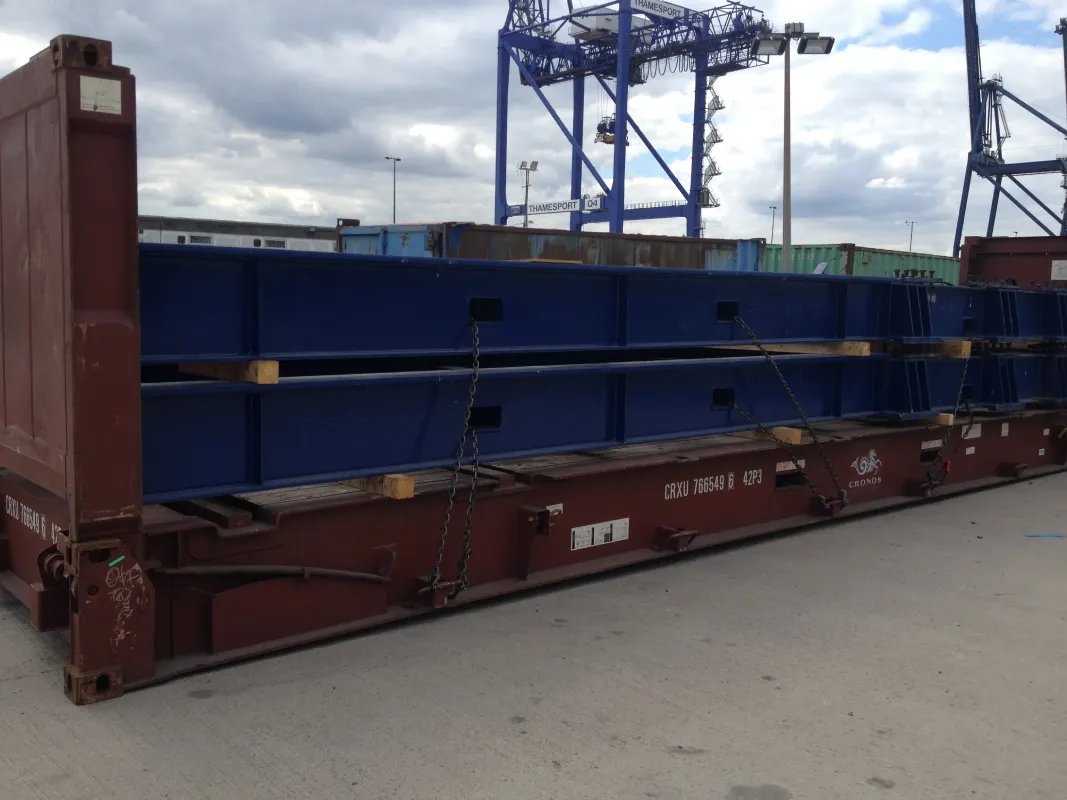
Flat Racks Solihull
Flat racks are open container platforms used for loads that are too wide, too tall or too awkward for a standard box container. In Solihull, they are often chosen for machinery, fabricated steel, plant, generators, vehicle parts, moulds and project cargo moving through the M42 corridor, local business parks and freight routes linked to Birmingham Airport and the NEC. Because the sides are open, the decision is less about hiding the cargo and more about how the load will be lifted, strapped and moved safely on the road.
This makes the early details important. You need the overall dimensions, gross weight, centre of gravity, lifting points and whether the load can stay inside the normal road envelope. If any part overhangs, the haulier may need a different trailer, route checks or extra space for loading and unloading. Flat racks work well where a standard container would force dismantling, delay, or awkward packing.
For a quick footprint comparison with standard boxes, the 20ft container and 40ft container pages are useful references when you are checking space, access and turning room.
Choosing the right flat rack size
Flat racks are usually supplied in 20ft and 40ft lengths. The right choice depends on load length, weight spread, access points and how the cargo will be secured. The deck dimensions matter more than the nominal container size, because a heavy item may need room for dunnage, lashings and lifting gear as well as the product itself.
Common sizes and where they suit best
- 20ft flat rack - the external footprint is usually about 6.06m by 2.44m. It suits shorter machines, compact plant, small fabricated frames and single items that can be loaded from one direction.
- 40ft flat rack - the external footprint is usually about 12.19m by 2.44m. It suits longer fabrications, pipes, frames and equipment that needs more deck length or better weight spread.
External height and folded height vary by manufacturer and end-wall design, so check the exact unit rather than relying on the generic size label. Some flat racks have collapsible end walls, which helps when empty units need to be returned or stored. Fixed-end versions can be useful where the cargo needs more restraint at the ends.
If the cargo is tall but not wide, another container type may be a better fit. A standard box or an open top can sometimes protect the load better than a flat rack. The right answer depends on whether the main problem is width, height, top loading or weather protection.
Road transport also has gross vehicle and axle limits. The Government's Lorry Types and Weights guide is the quickest reference for GVW limits. In practice, the tare is the empty weight of the container or vehicle, and the payload is the usable load after those weights and the certification limits are counted.
Hire or buy and what condition means
The right route depends on how long the cargo programme will run. Flat rack hire is usually the better option for short projects, one-off machinery moves, temporary exhibition work or a single export movement. Buying makes more sense when the same business moves oversized cargo regularly, holds stock on site, or needs to control its own equipment between jobs.
Acorn Containers can advise on both routes, but the decision should be driven by use, not by habit. If the unit will only be needed for a defined period, hire avoids long-term storage and maintenance. If the load pattern is repeatable, purchase gives more control over condition, modifications and future availability.
Condition grades in practical terms
- One-trip means a container has made a single sea movement from the factory. On flat racks this is useful when you want cleaner steel, less repair history and a predictable deck condition.
- Cargo-worthy means the unit is structurally fit for sea transport after inspection. For flat racks, the frame, deck, end walls, lashing points and corner castings matter more than cosmetic marks.
- IICL is an inspection standard used by the Institute of International Container Lessors. It is a stricter benchmark and is often requested where export quality and structural history need to be clear.
- Wind and watertight means a container keeps out rain and draughts through its roof, walls and doors. Flat racks are open by design, so this label is not the main measure of suitability.
On a flat rack, inspect the deck boards, steel rails, end-wall hinges, twistlock corners and lashing rings. Bent rails, cracked welds or damaged castings are more important than paint marks. If the cargo will travel by sea, make sure the condition grade matches the booking requirements before the unit is released.
For a temporary move, see container hire in Solihull. For repeated use or a long-term fleet requirement, container sales in Solihull is usually the better route.
Delivery, access and placement across Solihull
Delivery in Solihull often runs through the M42, A45, A34 and the surrounding estate roads. The trunk road journey is only part of the job. The final approach into business parks, yards and construction sites is where most access issues appear. Shared entrances, visitor parking, gate controls, roundabouts, parked cars and narrow turning areas can all affect how a flat rack is delivered and where it can be left.
Industrial and commercial areas around Blythe Valley, Monkspath, Damson Parkway and the airport corridor may have timed access, security checks or limited loading windows. If the unit or the cargo is arriving during NEC events or busy airport periods, build in extra time for local traffic and gate procedures. A delivery slot that works on paper can still fail if the truck cannot line up safely.
See container delivery in Solihull for the main access and placement steps.
Site checks before booking
- Measure the entrance width, gate clearance and turning circle.
- Check for low branches, overhead cables, canopies and height barriers.
- Confirm the ground is firm, level and capable of taking the load.
- Keep clear of soft verges, loose gravel, standing water and steep cambers.
- Allow space for the truck to position, lift or lower the load and exit safely.
If a hiab or crane is needed, the operator may need room for outriggers and a clear drop zone. If the cargo is already on the flat rack, the lift plan must match the weight and the centre of gravity. Do not assume a forklift can handle the final move unless the full loading plan allows it.
Lead times depend on stock, condition, delivery method and how specific the request is. A common size can often be sourced sooner than a unit that needs a clean deck, a recent inspection or a particular end-wall type. If the cargo is time-sensitive, send dimensions, photos and the route details early so the supply and transport plan can be matched before dispatch.
Security, weather protection and export paperwork
Flat racks are open by design, so security depends on the cargo restraint and the site itself. Use rated chains, straps, edge protectors and anti-slip mats where needed. If the cargo remains on site, place it in a fenced compound with controlled access. For long stops, keep the lashing plan on file and check the cargo after the first movement and again after any weather event.
Condensation is usually less of a problem than in a sealed container because air moves freely around the load. Even so, wrapped machinery and tarped fabrications can still sweat if they were packed damp or moved from a cold yard into a warm space. Breathable covers, dry packing materials and good drainage around the cargo help reduce moisture build-up.
For export, the paperwork matters as much as the steel. A CSC plate is the safety approval plate showing that the container has passed the periodic inspection required for international transport. The official treaty guidance is set out by the IMO. If the flat rack is to be loaded onto a vessel, check the CSC date, the booking rules and whether the line accepts the exact unit type and condition.
Freight terms also need to be clear before the load leaves site. BIFA sets out standard freight liability terms that are often used as a reference point for handover, damage reporting and responsibility during transit. This is especially useful where the cargo is high value, difficult to replace or supplied under a chain of custody.
For road movement, confirm the haulier is using the right vehicle type and that the combined load stays within legal limits. The Government's Lorry Types and Weights guide is the relevant check for GVW and axle planning.
From enquiry to delivery or collection
A clear process saves time and reduces handling risk. The more accurate the first enquiry, the faster the supply team can match the right flat rack and delivery method to the job. This is especially important in Solihull, where site access can change quickly across business parks, industrial yards and shared commercial compounds.
- Send the cargo dimensions, weight, lifting points, centre of gravity and any overhang.
- State whether the job is hire or purchase, domestic or export, and whether the unit needs to remain on site.
- Provide photos, loading method and the address details for the Solihull site.
- Confirm access limits, ground type, opening hours and whether a crane, hiab or forklift will be used.
- Agree the unit size, end-wall type, condition grade and required paperwork.
- Schedule delivery or collection, then inspect the unit and cargo on arrival.
After delivery, good support means more than dropping the unit and leaving. It includes help with re-lashing, condition notes, return planning, inspection renewal for export and advice on storing the flat rack between jobs. If the cargo will be moved again, keep the lashing arrangement, serial number and inspection notes on file so the next movement starts from a known condition.
For buyers, maintenance is straightforward but should not be ignored. Keep the deck clear of trapped moisture, check for corrosion at the welds and corners, and replace damaged boards or fittings before the next use. For hire, report damage quickly so the unit can be assessed and prepared for the next movement.
Acorn Containers can support the full process from specification to return, including unit selection, site checks and follow-up after the delivery is complete.
FAQ
When should I use a flat rack instead of a standard container?
Use a flat rack when the cargo is too wide, too tall or too awkward to load through standard doors. It is common for machinery, fabricated steel, generators and oversized parts that need open access, strong lashing points and a clear lifting plan.
Can a flat rack be delivered to a business park in Solihull?
Yes, provided the access road, gate width, turning space and ground conditions can take the delivery vehicle. Business parks around Solihull often have controlled entrances, parked cars and shared yards, so the final approach needs checking before the truck is booked.
Do I need a crane or forklift for loading?
It depends on the cargo weight, lifting points and overhang. Some loads can be handled by forklift, but larger or awkward items usually need a crane or hiab. The key is to match the lifting gear to the centre of gravity and the loading plan.
Is a flat rack suitable for export?
Yes, if the unit has the right structural condition and a valid CSC plate for sea transport. You also need the booking details, packing information and freight terms lined up before the unit leaves site.
Should I hire or buy a flat rack?
Hire suits short projects, one-off moves and temporary use. Buying suits repeat work, export cycles and sites that need to control their own equipment. The right choice depends on how often the cargo moves and whether the unit will need to stay on site.
